
-
We’re currently investigating an issue related to the forum theme and styling that is impacting page layout and visual formatting. The problem has been identified, and we are actively working on a resolution. There is no impact to user data or functionality, this is strictly a front-end display issue. We’ll post an update once the fix has been deployed. Thanks for your patience while we get this sorted.
You are using an out of date browser. It may not display this or other websites correctly.
You should upgrade or use an alternative browser.
You should upgrade or use an alternative browser.
Double jockey wheels
- Thread starter Surfer
- Start date
Watch this Demonstration I suppose they are good on a wet boggy field, and on fine hardcore where a narrow single wheel digs in ?
Sproket said:Watch this Demonstration I suppose they are good on a wet boggy field, and on fine hardcore where a narrow single wheel digs in ?
At present we have a hard rubber wheel and on loose chippings on a pitch, it digs in but not as bad as a plastic type wheel. Also if using the mover, when the wheel starts to turn it has a tendency to dig in. I have tried pneumatic tyres previously and although they are good, they have a tendency to go flat at the most awkward times. I am now considering the Reich double wheel as it seems they will not dig in but hoping for feedback from someone who has one fitted. Thanks.
The double wheels seem to be on more solid ground. Perhaps the trench for the single wheel was 'specially dug' as the post is already below ground level when the video starts! That looks like misleading advertising to me. 😱hmy:
It's extra weight to carry as well.
It's extra weight to carry as well.
WoodlandsCamper said:The double wheels seem to be on more solid ground. Perhaps the trench for the single wheel was 'specially dug' as the post is already below ground level when the video starts! That looks like misleading advertising to me. 😱hmy:
It's extra weight to carry as well.
The boxed weight is 3kg so you are probably adding less than 2kg to the nose weight.
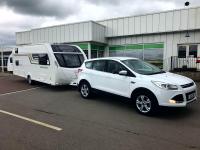
Looks ok to me , we do lots of CL sites and most are on grass so would come in handy .

A better comparison would have been a single pneumatic wheel, as I'm sure it would have competed on favourable terms with the twin. My pneumatic is at least 5x better than a solid wheel. And I don't have to remove it and mess about to tow it!
I gather this thing does not retract within the A frame when not in use ? A single larger pneumatic tyred wheel works well but can give problems stowing, and I really don't see going to all the trouble of removal and stoage.
On reallr soft ground my solution is to reduce nose weight by getting OH to grt in the caravn and go to the back, while I use the mover to get to hard ground.
Please note I am NOT getting into any debate about weights and lever arm lenghts. More than my life is worth, but the idea has always worked.
On reallr soft ground my solution is to reduce nose weight by getting OH to grt in the caravn and go to the back, while I use the mover to get to hard ground.
Please note I am NOT getting into any debate about weights and lever arm lenghts. More than my life is worth, but the idea has always worked.

The Reich video was I believe an artificially extreme demonstration. This is so typical of advertising departments.
You don't need to look very hard to see the ground over which the jockey wheel was being demonstrated had been prepared and made very soft, but importantly the ground over which the caravan wheels were being driven was firm.
What it didn't show was how the caravans main driven wheel would cope with the same soft ground, and I suspect the caravan would have bogged down. So has softness of the ground for this demonstration been taken too far?
So whats going on? - The solid tyred jockey wheel is quite hard and does not conform very well to the ground. This means it has a small contact area, and that creates a high contact pressure with the ground. High enough to overcome the grounds structural strength causing it to sink. What is needed is some way of reducing the tyres ground contact pressure.
Ray S's solution is one way. He reduces the load on the jockey wheel by adding more ballast behind the main axle.
But another way is to make the jockey wheel tyre more compliant so it spreads its load over a greater area thus reducing the contact pressure. This is pneumatic tyre solution.
The relationship between Load, area and contact pressure is simple;
Load = Pressure x Area,
and for this purpose we can assume the inflation pressure will be the same as the contact pressure, all rather handy.
So if the load is fixed, then by changing the inflation pressure the contact area of the tyre will change. You reduce the pressure to increase the contact area
Now you may think that adding a second tyre (a'la Reich) must be better, well if the inflation pressures are the same as the single tyre, then the total contact area will still be the same It just means that each tyre will carry half the load with half the contact area. But critically the contact pressure on the ground will remain the same. So there is little advantage to a twin wheel approach. This suggests that Gabgrandad's comment may have considerable value.
To make the twin tyre arrangement work twice as well as the single pneumatic tyre you must only inflate the dual tyres to half the pressure. But this begs the question, Would a single pneumatic tyre at half pressure perform just as well as the twin?
In reality its not quite as simple as I have made out, there are other factors which would favour a twin wheel over a single. For example the shape of a tyre does not exert a constant pressure to the ground over it entire contact area. The shape of its walls will affect how the tyre tries to climb over the next section of ground.
But coming back to point I made above, if the ground demonstrated could not support the caravans main wheels then the twin jockey wheel has no practical advantage.
Pragmatically, caravanners have managed up until now without the twin jockey wheel, is it another product looking for a problem?
You don't need to look very hard to see the ground over which the jockey wheel was being demonstrated had been prepared and made very soft, but importantly the ground over which the caravan wheels were being driven was firm.
What it didn't show was how the caravans main driven wheel would cope with the same soft ground, and I suspect the caravan would have bogged down. So has softness of the ground for this demonstration been taken too far?
So whats going on? - The solid tyred jockey wheel is quite hard and does not conform very well to the ground. This means it has a small contact area, and that creates a high contact pressure with the ground. High enough to overcome the grounds structural strength causing it to sink. What is needed is some way of reducing the tyres ground contact pressure.
Ray S's solution is one way. He reduces the load on the jockey wheel by adding more ballast behind the main axle.
But another way is to make the jockey wheel tyre more compliant so it spreads its load over a greater area thus reducing the contact pressure. This is pneumatic tyre solution.
The relationship between Load, area and contact pressure is simple;
Load = Pressure x Area,
and for this purpose we can assume the inflation pressure will be the same as the contact pressure, all rather handy.
So if the load is fixed, then by changing the inflation pressure the contact area of the tyre will change. You reduce the pressure to increase the contact area
Now you may think that adding a second tyre (a'la Reich) must be better, well if the inflation pressures are the same as the single tyre, then the total contact area will still be the same It just means that each tyre will carry half the load with half the contact area. But critically the contact pressure on the ground will remain the same. So there is little advantage to a twin wheel approach. This suggests that Gabgrandad's comment may have considerable value.
To make the twin tyre arrangement work twice as well as the single pneumatic tyre you must only inflate the dual tyres to half the pressure. But this begs the question, Would a single pneumatic tyre at half pressure perform just as well as the twin?
In reality its not quite as simple as I have made out, there are other factors which would favour a twin wheel over a single. For example the shape of a tyre does not exert a constant pressure to the ground over it entire contact area. The shape of its walls will affect how the tyre tries to climb over the next section of ground.
But coming back to point I made above, if the ground demonstrated could not support the caravans main wheels then the twin jockey wheel has no practical advantage.
Pragmatically, caravanners have managed up until now without the twin jockey wheel, is it another product looking for a problem?
There was at one time a shoe that a conventional jockey wheel was placed into and it functioned over gravel as a sledge.
I recall that Rhyno the mover maker sold a version of these and claimed it as the best solution for use on gravel.
The one sold pre Rhyno I saw, that was a folded steel item, about 16 Gauge, with slightly chamfered edges so not to dig in, but I have no data and have not seen them offered for sale in years.
Could be something easy enough to fold up as a DIY job to see if it helps.
My wide heavy duty Al-Ko plastic wheel even though having a van with 100 kgs noseweight works well enough, so I don't see a need myself.
I certainly don't need all the extra hassle to have to be fitting and removing a double wheeled assembly every time I need to deploy a jockey wheel. No way would it stow into my "A" frame.
I recall that Rhyno the mover maker sold a version of these and claimed it as the best solution for use on gravel.
The one sold pre Rhyno I saw, that was a folded steel item, about 16 Gauge, with slightly chamfered edges so not to dig in, but I have no data and have not seen them offered for sale in years.
Could be something easy enough to fold up as a DIY job to see if it helps.
My wide heavy duty Al-Ko plastic wheel even though having a van with 100 kgs noseweight works well enough, so I don't see a need myself.
I certainly don't need all the extra hassle to have to be fitting and removing a double wheeled assembly every time I need to deploy a jockey wheel. No way would it stow into my "A" frame.
I have gone off the idea mainly due to stowage issues and as per the issues raised on John's post. I think I will replace the solid rubber tyre with a pneumatic however I am not sure of the spindle size. Does any one know?Our ALKO assembly is the correct one for the pneumatic tyre however the tyre got destroyed when the assembly unwound itself on the way to the PC gathering at Stowford.
Also does any one know of the same size tyre that will not lose pressure constantly or explode? I am assuming that all jockey wheels are of the same quality or is one better than the other? thanks.
Also does any one know of the same size tyre that will not lose pressure constantly or explode? I am assuming that all jockey wheels are of the same quality or is one better than the other? thanks.
My box trailer came with a single jockey wheel.
When I fitted a motor mover to the trailer I discovered the jockey wheel made a wonderful job of ploughing a furrow in my crushed gravel drive...in fact it bordered on sub-soiling, rather than ploughing
Fitted a double wheel kit and and now my drive is furrowless & the trailer can be turned easily by hand when required.
The only problem I could foresee on some caravans would be fully retracting the jockey wheel/s, depending on the design of the a-frame fairing and the position of the jockey wheel mounting point.
It obviously depends how soft the ground is that you need to cross but the twin wheel idea solved my problem and saves me the grief I used to suffer if the driveway furrow was observed , before I had time to rake it over...... 🙂
When I fitted a motor mover to the trailer I discovered the jockey wheel made a wonderful job of ploughing a furrow in my crushed gravel drive...in fact it bordered on sub-soiling, rather than ploughing
Fitted a double wheel kit and and now my drive is furrowless & the trailer can be turned easily by hand when required.
The only problem I could foresee on some caravans would be fully retracting the jockey wheel/s, depending on the design of the a-frame fairing and the position of the jockey wheel mounting point.
It obviously depends how soft the ground is that you need to cross but the twin wheel idea solved my problem and saves me the grief I used to suffer if the driveway furrow was observed , before I had time to rake it over...... 🙂
Spurtle said:My box trailer came with a single jockey wheel.
When I fitted a motor mover to the trailer I discovered the jockey wheel made a wonderful job of ploughing a furrow in my crushed gravel drive...in fact it bordered on sub-soiling, rather than ploughing
Fitted a double wheel kit and and now my drive is furrowless & the trailer can be turned easily by hand when required.
The only problem I could foresee on some caravans would be fully retracting the jockey wheel/s, depending on the design of the a-frame fairing and the position of the jockey wheel mounting point.
It obviously depends how soft the ground is that you need to cross but the twin wheel idea solved my problem and saves me the grief I used to suffer if the driveway furrow was observed , before I had time to rake it over...... 🙂
Hello and welcome to the forum
As per my earlier posting I have no doubt that win wheels will work, but the logic behind them is not as clear cut as it may seem at first. So I am please you problem was resolved, but what you don't tell us is what type of tyre was fitted to your jockey wheel supplied with the trailer? I suspect it would have been a solid tyre, rather than a pneumatic one.
Your problem may have been resolved with a less expensive single wheel pneumatic option.
Thanks for the welcome.
Standard Ifor Williams box trailers all come with solid jockey wheels , mine being the 50 x 205mm variant.
The width of the yolk or fork that the wheel sits in is only 55mm, so to get a wider wheel fitted with an inflatable tyre would have meant changing the whole jockey wheel assembly anyway
So, in my case, the twin wheel option was an easy choice.
Perhaps a track laying jockey wheel is the answer....next series of dragons den 🙂
Standard Ifor Williams box trailers all come with solid jockey wheels , mine being the 50 x 205mm variant.
The width of the yolk or fork that the wheel sits in is only 55mm, so to get a wider wheel fitted with an inflatable tyre would have meant changing the whole jockey wheel assembly anyway
So, in my case, the twin wheel option was an easy choice.
Perhaps a track laying jockey wheel is the answer....next series of dragons den 🙂
Spurtle said:.................
Perhaps a track laying jockey wheel is the answer....next series of dragons den 🙂
How about turning the caravan it a hovercraft. I'm sure Top Gear would approve 😉
Spurtle said:Perhaps a track laying jockey wheel is the answer....next series of dragons den 🙂
One can be seen here .... 😉
Sproket has pointed to a promotional video for the Camper Trolley devices.
Note however they openly admit you must use the device to push a caravan up a hill, not pull it. Its not a lack of power but the lack of grip to hold or more importantly stop a caravan on a gradient. As many caravanners will want to pull their caravans up a drive for security reasons, that is a limitation if it means you have to leave the hitch exposed so thieves can easily hitch up and go.
One of the other videos for the camper trolley brilliantly demonstrates why A frame movers are not the best option for caravanners Watch this video
https://www.youtube.com/watch?v=DQVNPf_n4Ok
At about 1 minutes in, notice how the device stops moving the caravan through lack of traction. It needs the owner to jump on the A frame to add additional down force. Whilst it is difficult to see in the video, but there seems to be hardly any gradient!. Not a very good example for safe thinking.
These A frame device are a good solution for places where the ground is flat and hard (Caravan dealers sites, workshops) but where the terrain is unknown or slippy, they simply can't cut the mustard.
Note however they openly admit you must use the device to push a caravan up a hill, not pull it. Its not a lack of power but the lack of grip to hold or more importantly stop a caravan on a gradient. As many caravanners will want to pull their caravans up a drive for security reasons, that is a limitation if it means you have to leave the hitch exposed so thieves can easily hitch up and go.
One of the other videos for the camper trolley brilliantly demonstrates why A frame movers are not the best option for caravanners Watch this video
https://www.youtube.com/watch?v=DQVNPf_n4Ok
At about 1 minutes in, notice how the device stops moving the caravan through lack of traction. It needs the owner to jump on the A frame to add additional down force. Whilst it is difficult to see in the video, but there seems to be hardly any gradient!. Not a very good example for safe thinking.
These A frame device are a good solution for places where the ground is flat and hard (Caravan dealers sites, workshops) but where the terrain is unknown or slippy, they simply can't cut the mustard.
Looks like my Dragon's Den idea has been undermined from every aspect 
http://www.groveproducts.co.uk/produit.asp?id_prod=QQ007205
http://www.groveproducts.co.uk/produit.asp?id_prod=QQ007205
http://www.groveproducts.co.uk/produit.asp?id_prod=QQ007205[/quoteSpurtle said:Looks like my Dragon's Den idea has been undermined from every aspect
]http://www.groveproducts.co.uk/produit.asp?id_prod=QQ007205
Must try harder 🙁
As our van kept getting bogged down in the mud at our storage site I purchased the double wheels but no longer use them as they do not retract into the A frame. There is only room in the A frame for one wheel..Each time you use the van you have to attach and then detach one of the wheels so that you can raise the jockey.
Too much trouble so stopped using it and gone back to a single wheel
Too much trouble so stopped using it and gone back to a single wheel