• We’re currently investigating an issue related to the forum theme and styling that is impacting page layout and visual formatting. The problem has been identified, and we are actively working on a resolution. There is no impact to user data or functionality, this is strictly a front-end display issue. We’ll post an update once the fix has been deployed. Thanks for your patience while we get this sorted.

Chemical toilet

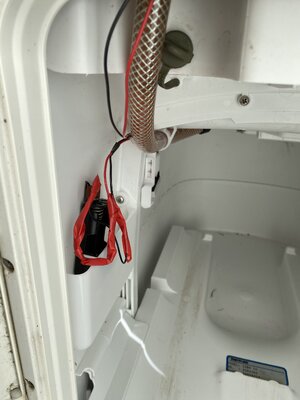
There is some wires and a battery holder in the cassette storage cabinet on my caravan . I thought it might be to do with the toilet ? IMG_2166.jpeg
 
A first on me, but I suspect it is to power the "over full" warning LED, instead of more typically as with all of mine been wired off the van's DC system?

A DIY get round, but a pragmatic way to avoid running in a feed though none the worst for that IMO?
Watch for battery aging issues as I suspect they will see little use but could go "nasty" weeping etc given being left in there too long. Best avoid budget batteries on that count, or religiously throw out at the end of each season.
 
Last edited:
Periodically when cleaning the cassette I might test the full warning light, but our (my) routine was to empty it each day unless it was hammering down. Even without hearing aids or spectacles on I knew pretty well when it required emptying. 😱
 
Me too on several counts, mainly the weight in manhandling it, I prefer easier jobs than more challenging. The frequent short duration empties asks but very little of any chemicals to fend off putrefaction. Plus, it gets me a bit of forced exercise, off of sitting down too long.
 
Me too on several counts, mainly the weight in manhandling it, I prefer easier jobs than more challenging. The frequent short duration empties asks but very little of any chemicals to fend off putrefaction. Plus, it gets me a bit of forced exercise, off of sitting down too long.
Can’t beat a bit of weight bearing exercise to help maintain bone density. 😂
 
The visible manuf label shows this to be a 200cw which has the manual flush. If it has a full indicator LED then presumably this is the power source. The red insulating tape shows that this has been rewired - I think normally the cables terminate in a small female connector. You could test the cassette water filled with and without batteries in the holder. Then you could neaten up the connection to prevent future issues.
 
Or simply place a magnet in the right zone with the cassette out, and somebody on board to check the light, though that does not check if the float is free operating. That is reasonably reliably tested by the "clonk test", can you hear it when inverting an empty cassette?
 
Last edited:
On my Coachman the wires shown went to a two pin socket, which was to supply a drop in electric pump to be able to fill the toilet water tank.
 
A first on me, but I suspect it is to power the "over full" warning LED, instead of more typically as with all of mine been wired off the van's DC system?

A DIY get round, but a pragmatic way to avoid running in a feed though none the worst for that IMO?
Watch for battery aging issues as I suspect they will see little use but could go "nasty" weeping etc given being left in there too long. Best avoid budget batteries on that count, or religiously throw out at the end of each season.
Thank you
 
  • Like
Reactions: JTQ

TRENDING THREADS

Latest posts

Back
Top