Does anyone tow or know anyone who tows with this BMW or Mercedes C300e estate? I'm interested in a hybrid because we have a charger at home, but on researching these 2 cars, found out that the manufacturers de-tune the 2.0L engine on the hybrids. So how well do these cars tow when the electric motor isn't working and just the de-tuned engine is pulling the caravan and heavy car? I currently have a BMW X1 petrol and Swift Aventura caravan 1462kg, but am up for a change of towcar soon.

-
We’re currently investigating an issue related to the forum theme and styling that is impacting page layout and visual formatting. The problem has been identified, and we are actively working on a resolution. There is no impact to user data or functionality, this is strictly a front-end display issue. We’ll post an update once the fix has been deployed. Thanks for your patience while we get this sorted.
You are using an out of date browser. It may not display this or other websites correctly.
You should upgrade or use an alternative browser.
You should upgrade or use an alternative browser.
BMW 3 series estate Plug in hybrid: towing performance
- Thread starter owlman
- Start date
I tow with a BMW 330e X drive touring. I am more than delighted by its performance and economy, both solo and towing. Coming from a BMW X1, you'll be very impressed with both. I also pull a Swift Aventura van, though mine's an A4, a bit lighter than yours.
I've read those things about degraded performance when the battery's discharged, but in real life struggle to encounter circumstances when it actually happens. Even when the battery display says 'zero' there is always enough for the electric motor to contribute its share of full power acceleration up to 90mph or so. Which seems enough, since once its up to speed there's plenty of spare power to recharge the battery. Anyway, when towing I usually keep it in Sport mode which ensures that there's always enough battery charge to get you to the top of an Alpine Pass whilst towing. 😊
What I would massively recommend, if you're buying a new or nearly new car (applies to everything, not just BMW), is that you absolutely hold out for one with an original BMW factory installed towbar. It's electrically deployable, which is nice, but these days the main issue is integration with vehicle control software and electronics and I don't believe any aftermarket installer is able to achieve that now.
I've read those things about degraded performance when the battery's discharged, but in real life struggle to encounter circumstances when it actually happens. Even when the battery display says 'zero' there is always enough for the electric motor to contribute its share of full power acceleration up to 90mph or so. Which seems enough, since once its up to speed there's plenty of spare power to recharge the battery. Anyway, when towing I usually keep it in Sport mode which ensures that there's always enough battery charge to get you to the top of an Alpine Pass whilst towing. 😊
What I would massively recommend, if you're buying a new or nearly new car (applies to everything, not just BMW), is that you absolutely hold out for one with an original BMW factory installed towbar. It's electrically deployable, which is nice, but these days the main issue is integration with vehicle control software and electronics and I don't believe any aftermarket installer is able to achieve that now.

Your comments mirror those of others on the Forum who have experience of towing with PHEV. Even if a motor is slightly detuned, how often is max power really needed on a modern car, and as you confirm the electric support doesn’t disappear completely.I tow with a BMW 330e X drive touring. I am more than delighted by its performance and economy, both solo and towing. Coming from a BMW X1, you'll be very impressed with both. I also pull a Swift Aventura van, though mine's an A4, a bit lighter than yours.
I've read those things about degraded performance when the battery's discharged, but in real life struggle to encounter circumstances when it actually happens. Even when the battery display says 'zero' there is always enough for the electric motor to contribute its share of full power acceleration up to 90mph or so. Which seems enough, since once its up to speed there's plenty of spare power to recharge the battery. Anyway, when towing I usually keep it in Sport mode which ensures that there's always enough battery charge to get you to the top of an Alpine Pass whilst towing. 😊
What I would massively recommend, if you're buying a new or nearly new car (applies to everything, not just BMW), is that you absolutely hold out for one with an original BMW factory installed towbar. It's electrically deployable, which is nice, but these days the main issue is integration with vehicle control software and electronics and I don't believe any aftermarket installer is able to achieve that now.
I agree the BMW 330e is an excellent towcar. I personally would not get one with a BMW retractable towbar. Mine failed and it cost almost 1K to replace. 18 months later that one failed as well. Cost me £800 to have it removed and decoded from the car before an aftermarket one was fitted, then another £800 to have a non BMW bar fitted.
My current BMW is a 2022 car and I had an aftermarket towbar fitted with dedicated electrics and everything works perfectly - even the fridge on the van when towing, which is something that a factory fitted BMW towbar often doesn't have.
My brothers BMW also had a factory fitted towbar and it failed last year!
My current BMW is a 2022 car and I had an aftermarket towbar fitted with dedicated electrics and everything works perfectly - even the fridge on the van when towing, which is something that a factory fitted BMW towbar often doesn't have.
My brothers BMW also had a factory fitted towbar and it failed last year!

Where these failures electrical or physical.I agree the BMW 330e is an excellent towcar. I personally would not get one with a BMW retractable towbar. Mine failed and it cost almost 1K to replace. 18 months later that one failed as well. Cost me £800 to have it removed and decoded from the car before an aftermarket one was fitted, then another £800 to have a non BMW bar fitted.
My current BMW is a 2022 car and I had an aftermarket towbar fitted with dedicated electrics and everything works perfectly - even the fridge on the van when towing, which is something that a factory fitted BMW towbar often doesn't have.
My brothers BMW also had a factory fitted towbar and it failed last year!
John
Thanks for that Andrew, it's reassuring to know so is your a diesel or petrol? I'm probably going to go for a petrol one in today's market.I tow with a BMW 330e X drive touring. I am more than delighted by its performance and economy, both solo and towing. Coming from a BMW X1, you'll be very impressed with both. I also pull a Swift Aventura van, though mine's an A4, a bit lighter than yours.
I've read those things about degraded performance when the battery's discharged, but in real life struggle to encounter circumstances when it actually happens. Even when the battery display says 'zero' there is always enough for the electric motor to contribute its share of full power acceleration up to 90mph or so. Which seems enough, since once its up to speed there's plenty of spare power to recharge the battery. Anyway, when towing I usually keep it in Sport mode which ensures that there's always enough battery charge to get you to the top of an Alpine Pass whilst towing. 😊
What I would massively recommend, if you're buying a new or nearly new car (applies to everything, not just BMW), is that you absolutely hold out for one with an original BMW factory installed towbar. It's electrically deployable, which is nice, but these days the main issue is integration with vehicle control software and electronics and I don't believe any aftermarket installer is able to achieve that now.
All 330e are plug-in petrol hybrid. The petrol engine develops 184hp and the electric motor adds another 109hp.Thanks for that Andrew, it's reassuring to know so is your a diesel or petrol? I'm probably going to go for a petrol one in today's market.
Eeek! I'll keep my fingers crossed, then, since I'm out of warranty now.I agree the BMW 330e is an excellent towcar. I personally would not get one with a BMW retractable towbar. Mine failed and it cost almost 1K to replace. 18 months later that one failed as well. Cost me £800 to have it removed and decoded from the car before an aftermarket one was fitted, then another £800 to have a non BMW bar fitted.
My current BMW is a 2022 car and I had an aftermarket towbar fitted with dedicated electrics and everything works perfectly - even the fridge on the van when towing, which is something that a factory fitted BMW towbar often doesn't have.
My brothers BMW also had a factory fitted towbar and it failed last year!

In the last century, caravans were towed successfully by many cars who's BHP were less than 60. And even in those days the advice was to have 40BHP per Ton. In practice you do not need the prodigious power outputs of modern cars. It may be clever, and sometimes fun when on a track day, but the reality is you don't need sub 10 sec 0 to 60 in normal UK driving.
I am confident that as long as the caravan does weigh more than the cars permitted maximum towed weight the any car should be capable of towing. It may not match your expecations in which case you have the wrong expectations.
I am confident that as long as the caravan does weigh more than the cars permitted maximum towed weight the any car should be capable of towing. It may not match your expecations in which case you have the wrong expectations.
In terms of power, I entirely agree that modern cars usually have plenty. As always, you have expressed a technical and legal best practice answer to a question posed (well, assuming that you meant to write '..as long as the caravan does not weigh more than the cars permitted maximum towed weight..').In the last century, caravans were towed successfully by many cars who's BHP were less than 60. And even in those days the advice was to have 40BHP per Ton. In practice you do not need the prodigious power outputs of modern cars. It may be clever, and sometimes fun when on a track day, but the reality is you don't need sub 10 sec 0 to 60 in normal UK driving.
I am confident that as long as the caravan does weigh more than the cars permitted maximum towed weight the any car should be capable of towing. It may not match your expecations in which case you have the wrong expectations.
But there are some nuances and preferences, admittedly already fought over in quite a few other threads, but which I think are helpful to someone thinking about what towing vehicle to buy. Not just the specified and permitted maximum towed weight.
For towing, the torque characteristic of the motor is important; traditionally caravanners have liked diesel engines for their lowdown torque. Modern petrol engines can also be good (or terrible). If when you're driving it solo it feels gutless as you set off from the traffic lights or when you try to be brisk about pulling out from a junction, you're going to feel that much worse pulling a caravan as well. The characteristic of electric motors is also very good, just the range and public charging that worries people about towing. My opinion is that plug-in hybrid (PHEV) is great for towing and the best I've experienced.
Then also quite a big deal is the type of transmission - manual gearbox, torque convertor auto, dual clutch auto and these days a multitude of other novel arrangements. Traditionally, most caravanners have favoured automatic transmissions. However, these days most automatics are the dual clutch type and I harbour quite a dislike for those. Others may (and will!) disagree, but they can be jerky and notchy in low speed manoeuvring and the software can be slow to react when you need to join a gap in traffic. All a bit unpleasant and although it feels like you're driving an automatic its all a result of computer controlled slipping clutches. The thought of towing with a slipping clutch makes me wince. Having test driven a few different options, I came down quite firmly on my choice of the BMW 330e because they still use a torque convertor auto.

Fully agree your comments wrt dual clutch auto boxes. I’ve had two. One DSG on a 2 litre Superb diesel and one on a Kia 1.5 turbo petrol Kia Xceed. Both cars drove very well under normal driving conditions, but were not good under very slow manoeuvring such as close parking etc. The Superb with its diesel torque and conventional handbrake being somewhat more forgiving than the Kia Xceed with electronic handbrake. Other than conventional manual or torque converter autos I’ve had two Subaru Forester petrols with CVT gearboxes. No issues whatsoever and very smooth throughout the complete range whether solo or towing. The XT being brilliant all round car, but quite a thirsty beast.In terms of power, I entirely agree that modern cars usually have plenty. As always, you have expressed a technical and legal best practice answer to a question posed (well, assuming that you meant to write '..as long as the caravan does not weigh more than the cars permitted maximum towed weight..').
But there are some nuances and preferences, admittedly already fought over in quite a few other threads, but which I think are helpful to someone thinking about what towing vehicle to buy. Not just the specified and permitted maximum towed weight.
For towing, the torque characteristic of the motor is important; traditionally caravanners have liked diesel engines for their lowdown torque. Modern petrol engines can also be good (or terrible). If when you're driving it solo it feels gutless as you set off from the traffic lights or when you try to be brisk about pulling out from a junction, you're going to feel that much worse pulling a caravan as well. The characteristic of electric motors is also very good, just the range and public charging that worries people about towing. My opinion is that plug-in hybrid (PHEV) is great for towing and the best I've experienced.
Then also quite a big deal is the type of transmission - manual gearbox, torque convertor auto, dual clutch auto and these days a multitude of other novel arrangements. Traditionally, most caravanners have favoured automatic transmissions. However, these days most automatics are the dual clutch type and I harbour quite a dislike for those. Others may (and will!) disagree, but they can be jerky and notchy in low speed manoeuvring and the software can be slow to react when you need to join a gap in traffic. All a bit unpleasant and although it feels like you're driving an automatic its all a result of computer controlled slipping clutches. The thought of towing with a slipping clutch makes me wince. Having test driven a few different options, I came down quite firmly on my choice of the BMW 330e because they still use a torque convertor auto.
We decided to sell the Kia because my wife wanted a higher riding car and we acquired another dog and the Kia was a bit short on space. So looking around we plumbed for a Toyota RAV4 hybrid, and it’s close in manoeuvring is inch perfect and it’s just seamless between petrol and electric drive. All I do is turn off auto hold when close parking etc. With a 4 cylinder 2.5 petrol giving 160kw and front motor at 88kw (215 bhp in total) overall its remarkably economical, but it wasn’t bought to be the last word in economy, but for its 10 year warranty and space.
It’s the limitations placed by the design of the powertrain by the designers. Electric motors delivery very high torque from start up and that torques has to be routed via gears, joints, shafts and couplings. To give a higher towing load would require increased weight ( and cost) to the powertrain. Cars are designed to maximise their attraction to as wider market as possible and meet emissions targets. Caravanning is a minority hobby, and I’m not sure the younger generations see it in the same way our generation saw it.Makes you wonder why a hybrid car with a 2.5ltr petrol engine can only legally tow a maximum of 1500kg when it could probably tow a lot more as kerb weight is a lot higher than 1500kg?
My car has 215 bhp hybrid FWD and its towing load is 800kg. If I had required a 1500 kg load I would have to have bought the AWD variant. But not wanting to tow I saw no need to go AWD and drag a load of extra weight and complexity around.
As a matter of interest, if you parked up and the auto hold was on, when you come back to the car does the auto hold automatically activate on start up or do you need to manually activate it again?Fully agree your comments wrt dual clutch auto boxes. I’ve had two. One DSG on a 2 litre Superb diesel and one on a Kia 1.5 turbo petrol Kia Xceed. Both cars drove very well under normal driving conditions, but were not good under very slow manoeuvring such as close parking etc. The Superb with its diesel torque and conventional handbrake being somewhat more forgiving than the Kia Xceed with electronic handbrake. Other than conventional manual or torque converter autos I’ve had two Subaru Forester petrols with CVT gearboxes. No issues whatsoever and very smooth throughout the complete range whether solo or towing. The XT being brilliant all round car, but quite a thirsty beast.
We decided to sell the Kia because my wife wanted a higher riding car and we acquired another dog and the Kia was a bit short on space. So looking around we plumbed for a Toyota RAV4 hybrid, and it’s close in manoeuvring is inch perfect and it’s just seamless between petrol and electric drive. All I do is turn off auto hold when close parking etc. With a 4 cylinder 2.5 petrol giving 160kw and front motor at 88kw (215 bhp in total) overall its remarkably economical, but it wasn’t bought to be the last word in economy, but for its 10 year warranty and space.
Thanks. After the past 2 weeks our next car will definitely be AWD again, but that is because of where we live in a rural location. If in town no issue.It’s the limitations placed by the design of the powertrain by the designers. Electric motors delivery very high torque from start up and that torques has to be routed via gears, joints, shafts and couplings. To give a higher towing load would require increased weight ( and cost) to the powertrain. Cars are designed to maximise their attraction to as wider market as possible and meet emissions targets. Caravanning is a minority hobby, and I’m not sure the younger generations see it in the same way our generation saw it.
My car has 215 bhp hybrid FWD and its towing load is 800kg. If I had required a 1500 kg load I would have to have bought the AWD variant. But not wanting to tow I saw no need to go AWD and drag a load of extra weight and complexity around.
The towing limit of all cars is based on the lowest restriction of all the various components and for most manufacturers, economy and emissions are far more important than towing ability - for example, why fit a heavy-duty transmission if a light duty one gives better economy and is cheaper to make.Makes you wonder why a hybrid car with a 2.5ltr petrol engine can only legally tow a maximum of 1500kg when it could probably tow a lot more as kerb weight is a lot higher than 1500kg?
If in traffic after a preset time in autohold it defaults to parking brake automatically but keeps Autohold a ai for when you next come to a halt. After stopping the engine autohold goes off and parking brake comes on. So when you next start the car you have to select autohold from a button near the gear lever.As a matter of interest, if you parked up and the auto hold was on, when you come back to the car does the auto hold automatically activate on start up or do you need to manually activate it again?
Spent time living and working in Dartmoor and Cumbria with two wheel drive cars ( nc Skoda Estelle) and no problems commuting miles to work. Also living in Wiltshire for many years we had 2wd and 4/AWD but the main commuter across the county seemed to be relegated to the 2wd option. Can’t say I really encountered any problems apart from one severe winter when a colleague and I decided no way would my Marina estate or his Avenger make it 8 miles into Bath. So we walked in to the office, only to find our boss who lived less than a mile away hadn’t made it. 😢Thanks. After the past 2 weeks our next car will definitely be AWD again, but that is because of where we live in a rural location. If in town no issue.
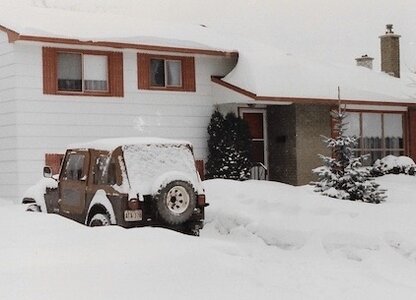
This Jeep had 4WD but its previous owner had come from Hawaii and the tyres were rubbish. It would do pirouettes as soon as look at it.
Thanks as thought I had missed something. Same with our Toyota, but not an issue on the Hyundai.If in traffic after a preset time in autohold it defaults to parking brake automatically but keeps Autohold a ai for when you next come to a halt. After stopping the engine autohold goes off and parking brake comes on. So when you next start the car you have to select autohold from a button near the gear lever.
Having had AWD for the past 20 years, FWD only is a different experience, but maybe I will get used to it. Apparently there is not much difference in mpg between FWD and AWD HEVs?Spent time living and working in Dartmoor and Cumbria with two wheel drive cars ( nc Skoda Estelle) and no problems commuting miles to work. Also living in Wiltshire for many years we had 2wd and 4/AWD but the main commuter across the county seemed to be relegated to the 2wd option. Can’t say I really encountered any problems apart from one severe winter when a colleague and I decided no way would my Marina estate or his Avenger make it 8 miles into Bath. So we walked in to the office, only to find our boss who lived less than a mile away hadn’t made it. 😢
This Jeep had 4WD but its previous owner had come from Hawaii and the tyres were rubbish. It would do pirouettes as soon as look at it.
When I bought the RAV4 its tyres were the OEM basically summer Bridgestones at around 3-4mm. So I took them off and put all season Goodyear Vectors on it. We dipped out on last weeks snow so no chance to take it up the slope of our close. What did Hyundai fit to the Tucson?Having had AWD for the past 20 years, FWD only is a different experience, but maybe I will get used to it. Apparently there is not much difference in mpg between FWD and AWD HEVs?
We have Michelin Primera tyres. My choice would be Michelin Cross Climate as best tyre I have ever used in all sorts of weather.When I bought the RAV4 its tyres were the OEM basically summer Bridgestones at around 3-4mm. So I took them off and put all season Goodyear Vectors on it. We dipped out on last weeks snow so no chance to take it up the slope of our close. What did Hyundai fit to the Tucson?
Cannot understand why more manufacturers don’t fit AS as standard, as the price differential isn’t great, and would probably disappear completely as more were fitted.. Mind you looking at a Wilts police Insignia estate last week that had summer tyres fitted and only fwd.We have Michelin Primera tyres. My choice would be Michelin Cross Climate as best tyre I have ever used in all sorts of weather.
Emissions!Cannot understand why more manufacturers don’t fit AS as standard, as the price differential isn’t great, and would probably disappear completely as more were fitted.. Mind you looking at a Wilts police Insignia estate last week that had summer tyres fitted and only fwd.
Summer tyres are marginally more economical than all-season of winter tyres, because they're optimised for economy.
Police fleets get through a lot of tyres and often change from summer to all-season sets for winter.
TRENDING THREADS
-

-

-
-
-
Mandatory eye tests for drivers over 70 being proposed by HMG. Good or bad?
- Started by Dustydog
- Replies: 201
-


