-
We’re currently investigating an issue related to the forum theme and styling that is impacting page layout and visual formatting. The problem has been identified, and we are actively working on a resolution. There is no impact to user data or functionality, this is strictly a front-end display issue. We’ll post an update once the fix has been deployed. Thanks for your patience while we get this sorted.
You are using an out of date browser. It may not display this or other websites correctly.
You should upgrade or use an alternative browser.
You should upgrade or use an alternative browser.
Caravan Jacking
- Thread starter Hutch
- Start date


I’ve used trolley Jack under the axle adjacent to the wheel, but never on the chassis itself. For years until I had the Alko side lift I carried a three tonne trolley jack with us. But of course the Alko Jack does use the dedicated chassis strengthened jacking points.Just looking through the March issue of the CCC magazine, and on the page for the RAC Arrival breakdown service, it shows the chap replacing a wheel on a caravan, with the caravan jacked up, using a trolly jack on the chassis, I always thought this was a No No.
What were you told. ?
I thought at first this would be a thread about a caravan being stolen while stopped at the lights. 🙂
Apparently not but relevant to something I want to do.
I want to rotate my tires on the caravan so that the bottom goes to the top i.e not sitting in the same place all the time. Its not practical for me to move the caravan in an out in the hope that the wheels will stop in a different place, so using a trolley jack seems an easier option for me.
I'm aware of using the jacking points but is there anything else I should consider. I'll raise the legs enough to get clearance as the van tips sideways slightly and I'm assuming the nose weight will be enough to stop it from tipping backwards.
I always losen the wheel nuts first.
Apparently not but relevant to something I want to do.
I want to rotate my tires on the caravan so that the bottom goes to the top i.e not sitting in the same place all the time. Its not practical for me to move the caravan in an out in the hope that the wheels will stop in a different place, so using a trolley jack seems an easier option for me.
I'm aware of using the jacking points but is there anything else I should consider. I'll raise the legs enough to get clearance as the van tips sideways slightly and I'm assuming the nose weight will be enough to stop it from tipping backwards.
I always losen the wheel nuts first.
Try to do the jacking with the caravan attached to the car - when not attached there's a possibility of the jockey wheel moving sideways when one side is jacked, with the resulting possibility of the caravan falling off the jack - this is more likely on a single axle caravan - got the T-shirt!
AWS mobiles don't seem to bother adjusting the steadies.
AWS mobiles don't seem to bother adjusting the steadies.

Although not quite the same, we need to jack the offside to remove tyre that slowly deflates over time. Jacking is not an issue as we have the built in ram.
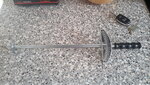
Refitting the tyre is the issue as it will need to be torqued and I do not have a torque wrench as never seen the necessity. To buy one to use once seems a waste of money.
Not sure how to get around this as do not really want to take the caravan to a tyre fitter.
Refitting the tyre is the issue as it will need to be torqued and I do not have a torque wrench as never seen the necessity. To buy one to use once seems a waste of money.
Not sure how to get around this as do not really want to take the caravan to a tyre fitter.
I would wind my nose wheel down until the wheel bar sat in the two slots, or sometimes put breeze blocks either side of the nose wheel. Belt and braces i chocked the opposite wheel. It’s not essential to hitch it to the car.I thought at first this would be a thread about a caravan being stolen while stopped at the lights. 🙂
Apparently not but relevant to something I want to do.
I want to rotate my tires on the caravan so that the bottom goes to the top i.e not sitting in the same place all the time. Its not practical for me to move the caravan in an out in the hope that the wheels will stop in a different place, so using a trolley jack seems an easier option for me.
I'm aware of using the jacking points but is there anything else I should consider. I'll raise the legs enough to get clearance as the van tips sideways slightly and I'm assuming the nose weight will be enough to stop it from tipping backwards.
I always losen the wheel nuts first.
Dont you retorque after having it serviced, or new tyres put on? That’s the recommended practice. I even do it with the cars too.Although not quite the same, we need to jack the offside to remove tyre that slowly deflates over time. Jacking is not an issue as we have the built in ram.
Refitting the tyre is the issue as it will need to be torqued and I do not have a torque wrench as never seen the necessity. To buy one to use once seems a waste of money.
Not sure how to get around this as do not really want to take the caravan to a tyre fitter.
Having the car hitched is a good safety point and chocking the opposite wheel(s) as well would be a belt and bracers approach but still worthwhile. The correct place for a jack is normally under the axle but check your handbook for exact location to be sure. If you do not have a hand book, they can often be found on the makers website.
A torque wrench is the only way to be sure that tyres are correctly torqued. As Other Clive says it is recommended that this be redone shortly afterwards, although the chances of a problem are very low and it has not been suggested to me when tyres were changed last few times or when car and caravan serviced.
A torque wrench is the only way to be sure that tyres are correctly torqued. As Other Clive says it is recommended that this be redone shortly afterwards, although the chances of a problem are very low and it has not been suggested to me when tyres were changed last few times or when car and caravan serviced.
My caravan dealership or AWS mobiles work sheets always recommended retorque after 25-50 miles depending on where it was serviced, but it was also stated in the Owners Manual too.Having the car hitched is a good safety point and chocking the opposite wheel(s) as well would be a belt and bracers approach but still worthwhile. The correct place for a jack is normally under the axle but check your handbook for exact location to be sure. If you do not have a hand book, they can often be found on the makers website.
A torque wrench is the only way to be sure that tyres are correctly torqued. As Other Clive says it is recommended that this be redone shortly afterwards, although the chances of a problem are very low and it has not been suggested to me when tyres were changed last few times or when car and caravan serviced.
My local tyre place just says to come back after 50 miles for a recheck, which I take to be a retorque. Even after having my suspension changed this week I have retorqued and alignment checked the wheels..
The dealer checks the torque after service and before we set off. In the past 56 years I have never torqued a wheel and have never had one come off. Mind you up to about 20 years ago they were steel wheels.Dont you retorque after having it serviced, or new tyres put on? That’s the recommended practice. I even do it with the cars too.
BTW on two different occasions we have had to have our wheels changed by the breakdown service Mayday and on neither occasion did they use a torque wrench. Just sheer brute strength! 😀
Last edited:

As Other Clive says it is recommended that this be redone shortly afterwards, .... and it has not been suggested to me when tyres were changed last few times or when car and caravan serviced.
That is an oversight on the part of the fitters. It is still not fully conclusively why, but caravans do have a history of loosing wheel nut tightness, and there's nothing wrong with taking the belt and braces approach.

I thought at first this would be a thread about a caravan being stolen while stopped at the lights. 🙂
Apparently not but relevant to something I want to do.
I want to rotate my tires on the caravan so that the bottom goes to the top i.e not sitting in the same place all the time. Its not practical for me to move the caravan in an out in the hope that the wheels will stop in a different place, so using a trolley jack seems an easier option for me.
I'm aware of using the jacking points but is there anything else I should consider. I'll raise the legs enough to get clearance as the van tips sideways slightly and I'm assuming the nose weight will be enough to stop it from tipping backwards.
I always losen the wheel nuts first.
I Jack from behind the wheel and under the axle mount reinforcing. In that way the van wiould have a tendency to tip forward rather than back. I now have Kojack points so just use them. I don’t need to clear the wheel from the ground. I then use brick and/or wood to pack under the axle in order to take the weight off the tyre.
Also a small extra security measure.
Done the same for years.
John
The dealer checks the torque after service and before we set off. In the past 56 years I have never torqued a wheel and have never had one come off. Mind you up to about 20 years ago they were steel wheels.
Despite re-torquing fairly regularly. I did have a detachment in Normandy on a D road at 50 mph. That concentrates the mind into checking more often. Since fitting WSL bolts I have never needed to make an adjustment. But still do it. As you have a TA perhaps less of an issue.
John
If you followed the advice, a torque wrench wouldn't just be used once - wheels should be re-torqued 50 miles after refitting AND before each towing trip.Although not quite the same, we need to jack the offside to remove tyre that slowly deflates over time. Jacking is not an issue as we have the built in ram.
Refitting the tyre is the issue as it will need to be torqued and I do not have a torque wrench as never seen the necessity. To buy one to use once seems a waste of money.
Not sure how to get around this as do not really want to take the caravan to a tyre fitter.
I have difficulty using a spanner never mind a torque wrench. How many wheel detachments happen with caravans or cars per year. Probably under .1% overall.If you followed the advice, a torque wrench wouldn't just be used once - wheels should be re-torqued 50 miles after refitting AND before each towing trip.

Remember a trolley jack is a dangerous bit of kit if it's relatively small wheels aren't supported on a hard solid surface such as concrete.
The jack must be able to move forward and backwards during the lifting and lowering process.
This is prevented from happening if it's wheels sink in on a soft surface or gravel.
The reason for this is the jacking point moves in an arc not straight up and down like a bottle jack.
The trolley jack lifting point must stay vertically under the point of contact with the caravan for the lift to be stable.
The jack must be able to move forward and backwards during the lifting and lowering process.
This is prevented from happening if it's wheels sink in on a soft surface or gravel.
The reason for this is the jacking point moves in an arc not straight up and down like a bottle jack.
The trolley jack lifting point must stay vertically under the point of contact with the caravan for the lift to be stable.
i seem to remember someone telling me do not use jack on chassis but use underneath axle that way chassis will not be twisted hang on will go get me hard hat on.That's good advice to record here.
Fortunately I've been using trolley jack's for years and my van is on a concrete base anyway.
Just need it to stop being wet and windy now.
Martin
I never used the trolley jack except for on the drive or when touring in case I had a puncture on the road. Small two tonne scissor jack on HDPE plate in event of jacking on gravel or grass pitch. Then I got an Alko side lift that allowed me to reduce carried weight and was all that I then required Plus the HDPE sheet.That's good advice to record here.
Fortunately I've been using trolley jack's for years and my van is on a concrete base anyway.
Just need it to stop being wet and windy now.

The original Al-ko side scissor Jack and chassis stiffener were dangerous. See the pics below. The orange brackets are from Kojack . Note their system clamps on both sides of the chassis stiffening it. Using a trolley Jack caused the problem. The right hand top is the failed Al-ko stiffener totally collapsed. Getting a Jack directly under the axle is not easy!
These days I only Jack up when detached from the car. When hitched up and jacking I have noticed the bathroom door jams . Meaning the whole,chassis and body is twisting. Now , I just chock all wheels and raise the steadies too.
These days I only Jack up when detached from the car. When hitched up and jacking I have noticed the bathroom door jams . Meaning the whole,chassis and body is twisting. Now , I just chock all wheels and raise the steadies too.
The only side lift Alko brackets I have ever used were L shaped and nothing like the ones in your picture ( black metal pieces).. The firts van I had Alko brackets on was a 2005 1400 kg so were your bent one’s an earlier design. Later Alko brackets for the side lift jack came in two weight specification and the higher rated ones were not dissimilar to the Kojak double gusset brackets. https://www.alko-tech.com/uk/jack. The link shows the two Alko types.
As an aside what were you doing going to the bathroom when on a jack? Too personal don’t answer 😂
As an aside what were you doing going to the bathroom when on a jack? Too personal don’t answer 😂
Last edited:
All supplied by Chipping Sodbury caravans from new.. Al-ko changed the design a while a go due to similar failures when using a trolley Jack. The OEM scissor Jack was impossible to use unless you had Herculean arms to use it. It took a few hours for the frame chassis to self straighten after jacking whilst hitched to the car. Jacking unhitched caused no problems.The only side lift Alko brackets I have ever used were L shaped and nothing like the ones in your picture ( black metal pieces).. The firts van I had Alko brackets on was a 2005 1400 kg so we’re your bent one’s an earlier design. Later Alko brackets for came in two weight specification and the higher rated ones were not dissimilar to the Kojak double gusted brackets. https://www.alko-tech.com/uk/jack. The link shows the two Alko types.
As an aside what were you doing going to the bathroom when on a jack? Too personal don’t answer 😂
TRENDING THREADS
-

-

-
Venus Lunar 550/4 Truma Water Pump , kitchen and bathroom sink ....
- Started by Thomas Dixon
- Replies: 1
-
-
-
-