
I was never in that boat, and if you look at Toolstation there is at least one CO detector suitable for use in caravans. You just have to look at the data sheet. Dare say Screwfix do similar, but I’m not the one needing another alarm.Well I was in the same boat as yourself, I took it out of the box and stuck it up, never thinking that you had to buy a specific one for a caravan, you live and learn I suppose, another smoke alarm heading for the bin lol

-
We’re currently investigating an issue related to the forum theme and styling that is impacting page layout and visual formatting. The problem has been identified, and we are actively working on a resolution. There is no impact to user data or functionality, this is strictly a front-end display issue. We’ll post an update once the fix has been deployed. Thanks for your patience while we get this sorted.
You are using an out of date browser. It may not display this or other websites correctly.
You should upgrade or use an alternative browser.
You should upgrade or use an alternative browser.
Smoke / co2 alarms
Page 2 - Passionate about caravans & motorhome? Join our community to share that passion with a global audience!
The co detector is easy enough to source , the smoke alarm will take a bit more research, they all seem to be a ten year battery which I don’t like , probably will be an Amazon job , we don’t have tool station hereI was never in that boat, and if you look at Toolstation there is at least one CO detector suitable for use in caravans. You just have to look at the data sheet. Dare say Screwfix do similar, but I’m not the one needing another alarm.
My AWS tech did the same for mine too, and though it was only a couple of years old it had been OBE. But in all honesty I can’t recall ever having issues with any of the earlier models that subsequently weren’t deemed suitable for caravans.When my fire Angel failed, I replaced it with a another almost identical Fire Angel one , it was only when I had my caravan serviced that the service tech told me that the alarm didn't conform to 50291-2. I didn't understand the difference that's when I replaced it again with a 50291-2.
I would have never known any of this only for the fact that the combi smoke / co2 alarm started to play up , now my head is sore researching the right alarms for the caravan now , trying to find ones that fit the regulations is crazy , well ones that don’t have a ten year battery that probably will only last a year knowing my luckMy AWS tech did the same for mine too, and though it was only a couple of years old it had been OBE. But in all honesty I can’t recall ever having issues with any of the earlier models that subsequently weren’t deemed suitable for caravans.
This link might help as it gives Fire Angels range of smoke/heat alarms plus the relevant specification for leisure vehicle alarms. Any mainstream manufacturers data sheet will give the required info. Good luck.I would have never known any of this only for the fact that the combi smoke / co2 alarm started to play up , now my head is sore researching the right alarms for the caravan now , trying to find ones that fit the regulations is crazy , well ones that don’t have a ten year battery that probably will only last a year knowing my luck

Spot on Hutch. 👍When my fire Angel failed, I replaced it with a another almost identical Fire Angel one , it was only when I had my caravan serviced that the service tech told me that the alarm didn't conform to 50291-2. I didn't understand the difference that's when I replaced it again with a 50291-2.
We should only use alarms in the caravan which have the -2 at the end of the conformity code. The -2 work over a far broader temperature range than the others
I suspect the differences are most likely to be in certification than physical, in that some makers have not invested in the testing involved for the much more limited market mobile relative to core domestic?I doubt anyone notices the difference or even knows that there is a difference
From my inside knowledge manufacturers tend to not like making niche versions of their main stream products, neither like seeking certification for niche markets. Unless, they can very handsomely sell to that market.
I tend to take to view most kit is designed to be transported by couriers of all flavours, so the abuse I will inflict it to is relatively going to be a walk in the park.

Post 1 could be similarly misleading. Mind you the prices of CO2 detectors can be eye wateringly expensive.It is of course a carbon monoxide CO alarm, not CO2 carbon dioxide.
This could be misleading and it probably ought to be edited for the benefit of those unaware of this very important differentiation, given the real seriousness of monoxide poisoning.
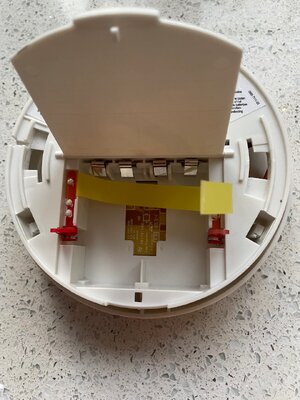
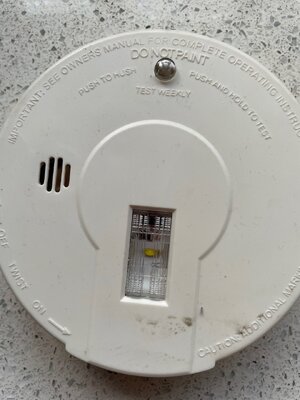
Some years ago my father moved to Lynton and bought a four storey house which he ran as a B&B. Not long after he moved in I visited him and he told me that there was a bird trapped somewhere in the higher floors as he could hear it chirping. Subsequent investigation revealed it was a smoke alarm giving its flat battery signal. So I went through the house and checked them all for life and tested them.My Kidde , purchased 2018, complained a few weeks the two 9 v batteries were nearly dead. It was bleeping every 2 minutes batteries flat. New batteries and the Kidde will be refitted in March, first trip of 2026
View attachment 10025
View attachment 10026
Quite correct,they do however supply details of the equipment and are a source of sales once the OP has finalized his decision,also they have a review systemSo do Screwfix and Safelincs too, but that doesn’t answer the OP’s question of who can recommend an alarm(s).
Safelincs - Fire Safety Products
Are you selecting new extinguishers, fire alarms or other fire safety equipment? Let us help you with friendly, professional advice. Call us on 0800 612 6537.www.safelincs.co.uk
Last edited:
As in North Devon? My uncle ran a guest house / hotel from 1965- 1980 and my cousins ran the bakery and restaurant for 15 years. One cousin still lives there! Small worldSome years ago my father moved to Lynton and bought a four storey house which he ran as a B&B. Not long after he moved in I visited him and he told me that there was a bird trapped somewhere in the higher floors as he could hear it chirping. Subsequent investigation revealed it was a smoke alarm giving its flat battery signal. So I went through the house and checked them all for life and tested them.
Yes North Devon. As you say Small World.As in North Devon? My uncle ran a guest house / hotel from 1965- 1980 and my cousins ran the bakery and restaurant for 15 years. One cousin still lives there! Small world
Do you remember Hollerday Hill? Alford House? Choughs Nest? The Greenhouse Restaurant and Bakery?Yes North Devon. As you say Small World.
Yes recall seeing them as we walked around the town. My father returned to Leicester after 6 years in Lynton. He found Lynton a bit lonely after divorcing from his wife, and little if any good transport to Barnstable for medical appointments if driving were a problem. . So he bought a nice flat in Leicester then bought a static at Beggars Roost campsite. He then spent April to November each year at his caravan until he was 90 and found the drive a bit too much.Do you remember Hollerday Hill? Alford House? Choughs Nest? The Greenhouse Restaurant and Bakery?
The interesting thing about CO alarms is that they only activate once the ppm reading hits 100 , which according to my gas training course , symptoms may already have started to appear(35-50 ppm is considered unsafe for prolonged exposure) so vigilance is required.
If you feel odd then something may be up, Generally if CO is being produced a lot of CO2 will be produced and you can smell that . I use the ones with a digital display so I can see the maximum value it reached . I also have a digital room CO2 detector, which does fluctuate wildly even in my front room, so not convinced its accurate( We used to use CO2 detectors which used thermal resistance to control CO2 in our range of specialist incubators and their accuracy was heavily dependant on the relative humidity) Infrared absorption sensors are more accurate ( used in Car Exhaust and flue gas analysers) but are a lot more expensive. There are several CO2 monitors on the market at reasonable prices , but they don't state what technology they use and as most are made by our chinese friends it difficult to assess their reliability. And finally smoke detectors ,whether optical or ionisation ,don't detect smoke, they detect small particles in the air ( one of which is smoke) and the test button doesn't test the detector, just the buzzer. I have a 'can of smoke' and another of CO for fully testing the detectors ( the CO detector has to be put in a plastic bag and the CO injected in to test it to get it upto 100 ppm. As the fire service advise, any detector ( with a good battery) is better than no detector
If you feel odd then something may be up, Generally if CO is being produced a lot of CO2 will be produced and you can smell that . I use the ones with a digital display so I can see the maximum value it reached . I also have a digital room CO2 detector, which does fluctuate wildly even in my front room, so not convinced its accurate( We used to use CO2 detectors which used thermal resistance to control CO2 in our range of specialist incubators and their accuracy was heavily dependant on the relative humidity) Infrared absorption sensors are more accurate ( used in Car Exhaust and flue gas analysers) but are a lot more expensive. There are several CO2 monitors on the market at reasonable prices , but they don't state what technology they use and as most are made by our chinese friends it difficult to assess their reliability. And finally smoke detectors ,whether optical or ionisation ,don't detect smoke, they detect small particles in the air ( one of which is smoke) and the test button doesn't test the detector, just the buzzer. I have a 'can of smoke' and another of CO for fully testing the detectors ( the CO detector has to be put in a plastic bag and the CO injected in to test it to get it upto 100 ppm. As the fire service advise, any detector ( with a good battery) is better than no detector
Regulations maybe different in UK but in NZ they recommend heat activated (60C ?) alarms in kitchen and bathroom areas. That way odd burnt toast won't set it off. Photoelectric ones every else.My caravan smoke alarm near the door was a regular beeper when grilling or making toast, but it had a mute facility that shut it up for a short period of time., around 5-10 minutes I think. The home ones have that too, but because of their positioning don’t tend to be sensitive unless MrsOC opens the oven door when doing a roast whilst having the door to the hall open 😂

Because in the advert on Amazon ( kidde 10SCO) does it mention anywhere that you can’t use this in a caravan.
Generally when it comes to safety equipment that may have a limited envelope of use, the manufacturer is sensibly required to identify where the item is approved or designed for use. If such an item does list your specific alternative environment in its use case or approvals list, you have to take the view it is not suitable or non compliant for your intended purpose.
If you think about it, It would be impossible and impractical for the manufacturer to list all the millions of other uses where a member of the public might consider trying to use the device, it's sometimes difficult to believe that caravanning is not as universally important or well understood as some caravanners often think it is.
As has already been pointed out, one of the most important differences between the environment in a caravan compared to normal domestic environments, is the surprisingly harsh vibrations caused by towing a caravan. These can produce some quite destructive forces that can damage sensitive sensors.
The insides of caravans can see much wider temperature extremes than most domestic environments, you have to remember the periods of storage. and the levels of humidity can also vary more, so caravans are much harsher environments.

Unfortunately these tragic incidents crop up from time to time. Others involving campers taking charcoal bbq, or fire pits into a tent cooking area when it’s wet, or just to keep them safe from overnight theft have led to deaths.Very sad reading this because people never understood the danger of carbon monoxide and a gas heater in an enclosed space. HERE.
Now your've got me thinking about how the caravans s3004 truma breaths. Is there inlet in flue or just relies on floor vents.Very sad reading this because people never understood the danger of carbon monoxide and a gas heater in an enclosed space. HERE.
In the unlikely event an idiot who knows nothing about caravan gas appliances decides to remove / repair their Truma S3004 make sure you replace the O ring where the flue joins the fire. Failure to so will allow CO into the living area.Now your've got me thinking about how the caravans s3004 truma breaths. Is there inlet in flue or just relies on floor vents.
But then we will all use a AWS etc 😉
When comes to gas I use professionals.In the unlikely event an idiot who knows nothing about caravan gas appliances decides to remove / repair their Truma S3004 make sure you replace the O ring where the flue joins the fire. Failure to so will allow CO into the living area.
But then we will all use a AWS etc 😉
Currently in process of planning removal of non original heavy gas/electric HW cylinder. Can't believe prices they charge to just disconnect HW feed and seal it. I'll remove cylinder along with isolated pipe.
TRENDING THREADS
-

-
-
-
-
 Just noticed we have a small crack in the middle of window on awning side from the top (at rear)
- Started by Beachball
- Replies: 13
-
 Mandatory eye tests for drivers over 70 being proposed by HMG. Good or bad?
- Started by Dustydog
- Replies: 230
-


