
Anybody have that foil stuff behind there home central heating radiators? Does it make a difference? If so what is the best stuff to buy 🤔

-
We’re currently investigating an issue related to the forum theme and styling that is impacting page layout and visual formatting. The problem has been identified, and we are actively working on a resolution. There is no impact to user data or functionality, this is strictly a front-end display issue. We’ll post an update once the fix has been deployed. Thanks for your patience while we get this sorted.
You are using an out of date browser. It may not display this or other websites correctly.
You should upgrade or use an alternative browser.
You should upgrade or use an alternative browser.
Foil behind radiators
- Thread starter borderbilly
- Start date
Not unless its scrunched up to block and inhibit the air flow, which I don't think the OP had in mind, more lining the wall with a film of foil to reflect radiated heat.I would probably think it slows the convection process, so possibly slows room warm up 🤔🤷♂️
I fitted that years ago. Its made of sponge backing with a fairly thick crinkled aluminium foil on the front. The idea is that it is stuck to the wall behind a radiator (foil towards the rad) and reflects the heat or to a certain extent radiates heat itself BUT it stops the radiator heating the wall.
IMO it does work in a way but the main issue is (a) what do you do when it comes to painting or repapering the wall and (b) it does after some time come unstuck and is the very devil to get back. In fact it is easier to replace it and it ain't cheap or wasn't when I did it.
IMO you would be better to have good cavity insulation and put a small shelf with a curved underside over the top of the radio to push rising heat outwards. Also make sure your curtains are hung so that the rising heat does not get into the window reveal - you want/need it to heat the room after all!
IMO it does work in a way but the main issue is (a) what do you do when it comes to painting or repapering the wall and (b) it does after some time come unstuck and is the very devil to get back. In fact it is easier to replace it and it ain't cheap or wasn't when I did it.
IMO you would be better to have good cavity insulation and put a small shelf with a curved underside over the top of the radio to push rising heat outwards. Also make sure your curtains are hung so that the rising heat does not get into the window reveal - you want/need it to heat the room after all!
Cant have cavity insulation as its a old cottage and I just rent. May try the shelf approach.I fitted that years ago. Its made of sponge backing with a fairly thick crinkled aluminium foil on the front. The idea is that it is stuck to the wall behind a radiator (foil towards the rad) and reflects the heat or to a certain extent radiates heat itself BUT it stops the radiator heating the wall.
IMO it does work in a way but the main issue is (a) what do you do when it comes to painting or repapering the wall and (b) it does after some time come unstuck and is the very devil to get back. In fact it is easier to replace it and it ain't cheap or wasn't when I did it.
IMO you would be better to have good cavity insulation and put a small shelf with a curved underside over the top of the radio to push rising heat outwards. Also make sure your curtains are hung so that the rising heat does not get into the window reveal - you want/need it to heat the room after all!
I don’t know, it’s not clear to what they intend 🤔Not unless its scrunched up to block and inhibit the air flow, which I don't think the OP had in mind, more lining the wall with a film of foil to reflect radiated heat.

I have fitted it to a few houses now. Its cheap, its simple to fit, it has never fallen off or become unstuck. I reckon it must work to a certain extent (preventing the wall absorbing some of the heat coming out of the radiator)?
For what it costs I reckon its worthwhile, but I have not an iota of evidence to support that.
For what it costs I reckon its worthwhile, but I have not an iota of evidence to support that.
A test option that would not impact the decoration or in a rented home upset a property owner would be to foil face some bits of corrugated card board, ply or the like and slip these behind the rads.
It could be force away from the radiator hard against the wall with a few bent willow twigs, or other like means.
This could be done at very low cost and give the OP some insight to its effect in his property.
It could be force away from the radiator hard against the wall with a few bent willow twigs, or other like means.
This could be done at very low cost and give the OP some insight to its effect in his property.

Our son has a heat driven fan on their log burner, and it is very effective.You can actual buy radiators with a built in fan, how efficient they are I don't know. My daughter has a heat fan on her log burner sees to work.

Mel
Moderator
We have a 1930s bungalow with solid brick walls so cavity insulation is not possible. We have double glazed windows (new at the back of the house, being replaced at the front) but it is a rather chilly house. Looking into that insulated wallpaper when we redecorate next year.
Something like this perhaps??
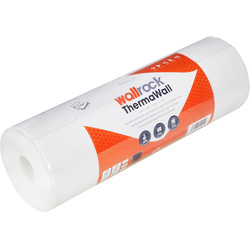
 www.toolstation.com
Mel
www.toolstation.com
Mel
Something like this perhaps??
Wallrock ThermaWall Insulation Paper
Wallrock ThermaWall combines strength and durability to reinforce walls and ceilings. At just 50cm wide, it’s narrower than traditional thermal liner and is much easier to work with – particularly in smaller areas such as window reveals.It creates a thermal barrier at the wall surface, helping...
www.toolstation.com
We used something similar on a house where a bedroom outer wall tended to condensation. I had tried using anti condensation paint with minimal effect, so used insulated paper which did stop the condensation, so it must have had some effect, although not noticeable in temperature or comfort when using the room.We have a 1930s bungalow with solid brick walls so cavity insulation is not possible. We have double glazed windows (new at the back of the house, being replaced at the front) but it is a rather chilly house. Looking into that insulated wallpaper when we redecorate next year.
Something like this perhaps??
MelWallrock ThermaWall Insulation Paper
Wallrock ThermaWall combines strength and durability to reinforce walls and ceilings. At just 50cm wide, it’s narrower than traditional thermal liner and is much easier to work with – particularly in smaller areas such as window reveals.It creates a thermal barrier at the wall surface, helping...
How affective they are depends on where the stove is installed.Our son has a heat driven fan on their log burner, and it is very effective.
If on top of a stove in an enclosed fireplace they may help but I have two on top of our free standing wood burner and I tested them with a flame on the fire lighter. After about 15cm they made no difference as the convection currents from the stove itself were more dominant.
I have ordered brackets to put a shelf above radiator and will get a roll of that foil stuff from Screwfix. Can but try.
Our sons sits in a large enclosed fireplace so not too constrained.How affective they are depends on where the stove is installed.
If on top of a stove in an enclosed fireplace they may help but I have two on top of our free standing wood burner and I tested them with a flame on the fire lighter. After about 15cm they made no difference as the convection currents from the stove itself were more dominant.

First of all the purpose of the foil is to reflect radiated heat back into the room, and to prevent it heating up the wall behind the radiator. The foil with a foam backing also helps to reduce the conduction of heat into the wall behind the radiator. Whether this truly advantageous depend largely on the construction of the wall behind the radiator.
A classic solid brick wall with no cavity, will track heat energy to the outside, so preventing heat reaching the wall is an energy saving solution.
A typical cavity wall, has either an air gap or the gap may be filled with some insulation, whose purpose is to create a thermal break which radically reduces the transfer of heat outside, and in these cases the foil will be less effective, and in some cases the inner wall may actually being used to increase the thermal mass of the room which evens out the heating effect when a thermostat has a large temperature hysteresis of its switching element. The mass of the wall is low to heat up, but equally slow to release any heat energy it has which smoothes and moderates temperature swings in the room.
As a non permanent solution, I have seen large corrugated card boxes cut to fit behind a radiator, usually hooking over the radiators support wall brackets and covered in silver foil. these have a very similar effect to the commercial foil, but the can also be easily removed for cleaning and or painting.
A classic solid brick wall with no cavity, will track heat energy to the outside, so preventing heat reaching the wall is an energy saving solution.
A typical cavity wall, has either an air gap or the gap may be filled with some insulation, whose purpose is to create a thermal break which radically reduces the transfer of heat outside, and in these cases the foil will be less effective, and in some cases the inner wall may actually being used to increase the thermal mass of the room which evens out the heating effect when a thermostat has a large temperature hysteresis of its switching element. The mass of the wall is low to heat up, but equally slow to release any heat energy it has which smoothes and moderates temperature swings in the room.
As a non permanent solution, I have seen large corrugated card boxes cut to fit behind a radiator, usually hooking over the radiators support wall brackets and covered in silver foil. these have a very similar effect to the commercial foil, but the can also be easily removed for cleaning and or painting.
I use the silver foam backed underlay as used for laminate floors, I've not done any research on the topic I just assume that any heat reflected back toward the radiator is a bonus especially if fitted on a wall that shares an outside aspect,also the material is handy on a car windscreen,a lot depends on the construction of the building
To get the best benefit from a reflective foil set behind a domestic radiator, it is important to have the foil facing the radiator and any thermal insulation facing the wall. The difference may only be relatively small but as the saying goes oak trees grow from acorns!
If you get it the wrong way round, and put the foil against the wall you might actually increase the heat loss to the wall.
If you get it the wrong way round, and put the foil against the wall you might actually increase the heat loss to the wall.
I'll get your coat 😉I suppose if you did it the wrong way you'd be foiled in your attempt to make improvements 😉
I had many times questioned, "who on earth could write this stuff?" 😉Sorry but I'm too busy writing jokes for Christmas Crackers.

I have tried the "thermal foil" for want of a better word, and being true, in our house with walls of 15 ft by 20 feet, the foil is of very little use.,our radiators are "twin banks" and with a footprint of the largest radiator being 6,ft by 3 ft.,on an outside cavity wall,
Reality is we are heating our homes inside brick walls from 9.30am at night until 8 pm in the morning we lose 3 degrees 21c down to 18c. Which is essentially making the house a storage heater .
we find a comfortable temp, is 18 c during the day and evening at 21c.,this is a large 4 bedroom house. Gas cost us £5 on average a day, and £2 .50 on electric. . Changes totally in summer to about £80. .,
Reality is we are heating our homes inside brick walls from 9.30am at night until 8 pm in the morning we lose 3 degrees 21c down to 18c. Which is essentially making the house a storage heater .
we find a comfortable temp, is 18 c during the day and evening at 21c.,this is a large 4 bedroom house. Gas cost us £5 on average a day, and £2 .50 on electric. . Changes totally in summer to about £80. .,
Are you in Australia? "9.30am at night until 8pm in the morning" 🤔I have tried the "thermal foil" for want of a better word, and being true, in our house with walls of 15 ft by 20 feet, the foil is of very little use.,our radiators are "twin banks" and with a footprint of the largest radiator being 6,ft by 3 ft.,on an outside cavity wall,
Reality is we are heating our homes inside brick walls from 9.30am at night until 8 pm in the morning we lose 3 degrees 21c down to 18c. Which is essentially making the house a storage heater .
we find a comfortable temp, is 18 c during the day and evening at 21c.,this is a large 4 bedroom house. Gas cost us £5 on average a day, and £2 .50 on electric. . Changes totally in summer to about £80. .,
TRENDING THREADS
-
-
-
 Just noticed we have a small crack in the middle of window on awning side from the top (at rear)
- Started by Beachball
- Replies: 9
-
 Mandatory eye tests for drivers over 70 being proposed by HMG. Good or bad?
- Started by Dustydog
- Replies: 230
-
-
Vision Plus Long Mast Pole - Swift Challenger 580 (2017)
- Started by Weebo
- Replies: 2
-
