

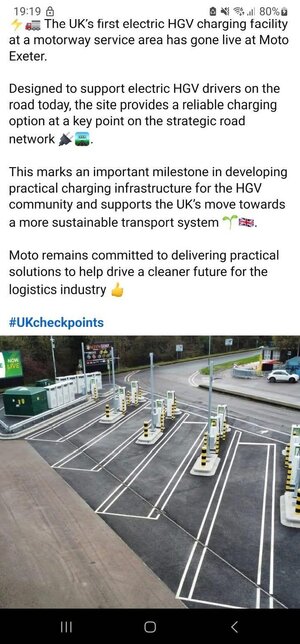
HGV E charging points
- Thread starter Dustydog
- Start date
You are using an out of date browser. It may not display this or other websites correctly.
You should upgrade or use an alternative browser.
You should upgrade or use an alternative browser.

- Sep 4, 2011
- 673
- 416
- 19,135
I think a lorry drivers language to find a car& caravan on one of them would will be unrepeatable


- Nov 11, 2009
- 25,582
- 9,368
- 50,935
I could not support a non EV outfit using them, but they should be available to EV outfits, but I doubt that they will be. After all a EV outfit can uncouple and park the caravan whilst the tow car charges its battery.

- Nov 11, 2009
- 25,582
- 9,368
- 50,935
I think HGV will be around 350 kw but with the aim being 1 mw supply. Mind you when solid state car batteries start to appear range will be potentially twice that of lithium based batteries, or same range for a smaller battery. Much reduced fire risk and faster charging too. So I suspect caravanners may not be so range inhibited as SSB enter the market. Although those that do high miles per day with a van might still have to decouple.I honestly don’t know so the answer hence the question.
Does the plug in EV lead have the same configuration for a HGV as for a domestic electric car?
Mel
A new instavolt multi bay charger near us and I’ve never seen a car plugged in yet. Because most motorists charge at home and possibly at work.
SAMSUNG SDI to Collaborate on All-Solid-State Battery Validation Project with BMW Group
<p style="line-height: 200%; text-align: center;"><span style="font-size: 14pt; font-weight: bold;">Samsung SDI, BMW, and Solid Power sign agreement to work together on all-solid-state batteries (ASSB)<⁄span><⁄p><br /><p style="line-height: 200%; text-align: center;"><span style="font-size...
www.samsungsdi.com
- Nov 11, 2009
- 25,582
- 9,368
- 50,935
Not many, but having charging facilities is an essential prerequisite for increased usage. Plus future emmisions controls will drive the uptake in years ahead.I wonder just how many Large E HGVs are out there?
GRIDSERVE | The rise of electric heavy goods vehicles in the UK: What businesses need to know in 2025
Electric heavy goods vehicles - or eHGVs for short - is the next area of transport to undergo an electric revolution. While cars travel thousands of miles m ...
 www.gridserve.com
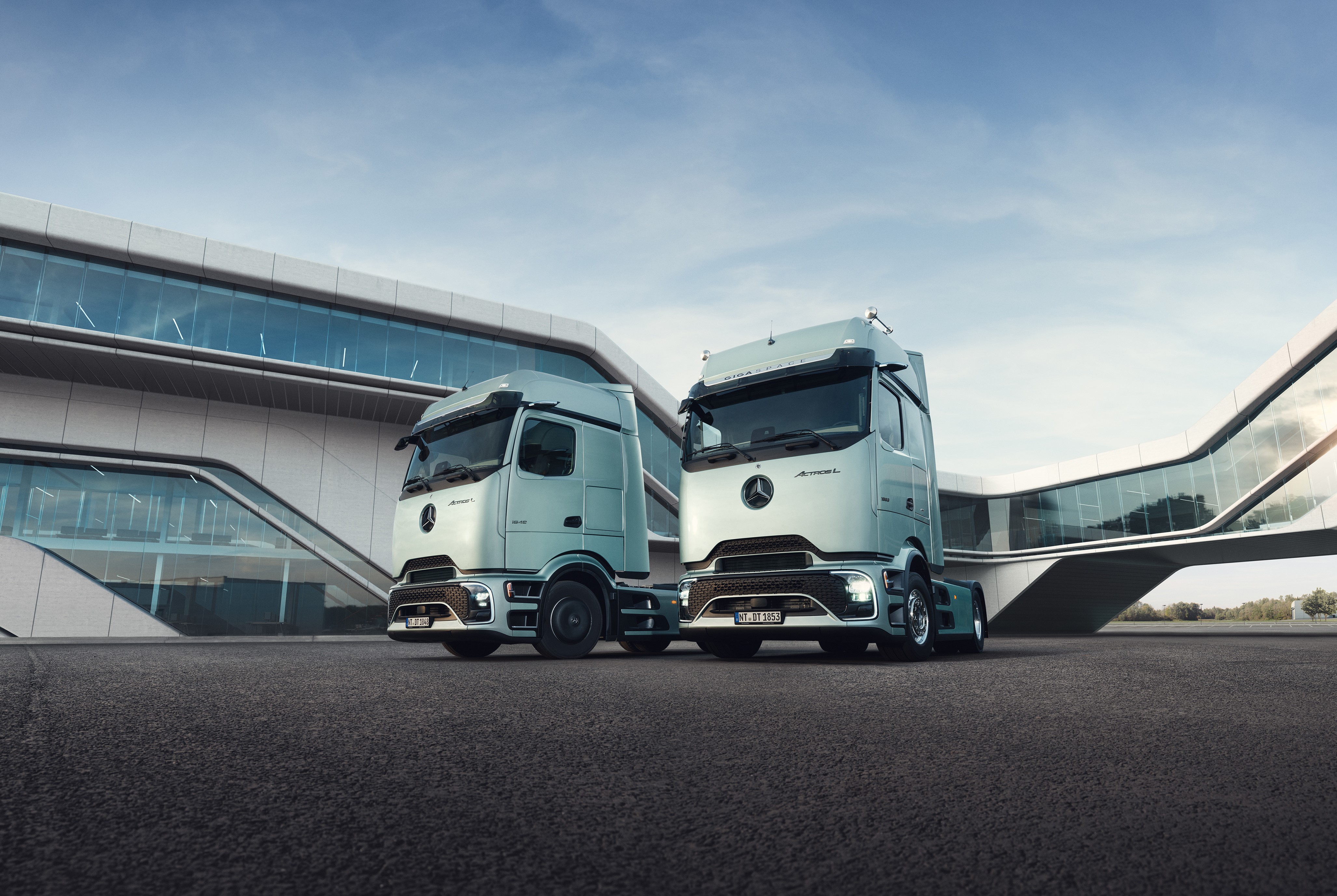
Electric lorry sales quadrupled in the third quarter of 2025
SMMT reveals big rise in zero emission HGVs as overall market stumbles

- Jul 18, 2017
- 16,734
- 5,391
- 50,935
That has already been killed off as many probably would not like to be paying the per miles charge on an EV? Many current HGV clock up 100's of thousands of miles before they are taken off the road. Some probably get to a million miles or so before being retired.I wonder just how many Large E HGVs are out there?
- Nov 11, 2009
- 25,582
- 9,368
- 50,935
But will HGV be pay per mile?That has already been killed off as many probably would not like to be paying the per miles charge on an EV? Many current HGV clock up 100's of thousands of miles before they are taken off the road. Some probably get to a million miles or so before being retired.
- Jul 18, 2017
- 16,734
- 5,391
- 50,935
Probably if it is an EV. Only the current government knows. Merry Christmas to you.But will HGV be pay per mile?

- Mar 14, 2005
- 19,234
- 4,407
- 50,935
I'm not sure why there is so much resistance to the concept of pay per mile.
For years drivers have been "happy enough" to by fuel for their vehicles, where every litre has the governments fuel duty applied. At today's rate you are paying 52.95 pence in fuel duty per litre.
For example if your fuel efficiency is 45miles per gallon, that means you will be are already paying 5.3p per mile driven and that will vary depending on your mpg.
So 3p per mile is actually a relatively good deal for EV's based on energy usage.
For years drivers have been "happy enough" to by fuel for their vehicles, where every litre has the governments fuel duty applied. At today's rate you are paying 52.95 pence in fuel duty per litre.
For example if your fuel efficiency is 45miles per gallon, that means you will be are already paying 5.3p per mile driven and that will vary depending on your mpg.
So 3p per mile is actually a relatively good deal for EV's based on energy usage.

- Jun 20, 2005
- 20,258
- 5,468
- 50,935
Our local Authority have been using an E HGV dustcart for bin collections. It can only cover 2/3rds distance of its diesel siblings. This means it takes one half longer to complete the same diesel round. More employees are needed so any power cost savings are eroded.
Applying a mileage tax will make the whole situation worse and ultimately the rates payer will pick up,the tab
Applying a mileage tax will make the whole situation worse and ultimately the rates payer will pick up,the tab
The mileage tax is to replace Treasury income for reduced fuel duty - we're going to have to pay it one way or the other.Our local Authority have been using an E HGV dustcart for bin collections. It can only cover 2/3rds distance of its diesel siblings. This means it takes one half longer to complete the same diesel round. More employees are needed so any power cost savings are eroded.
Applying a mileage tax will make the whole situation worse and ultimately the rates payer will pick up,the tab
- Nov 11, 2009
- 25,582
- 9,368
- 50,935
The Wiltshire electric recycling wagon is a trial that commenced January 2025 and initially was to be used in north Wiltshire urban areas, then in Salisbury, and then semi rural/urban and then rural areas. The county councils contractor, Hills, are working with Volvo on the trial, and the final results haven’t yet been published. The purpose of the trial is to inform future decisions wrt the Councils move to reducing emissions.Our local Authority have been using an E HGV dustcart for bin collections. It can only cover 2/3rds distance of its diesel siblings. This means it takes one half longer to complete the same diesel round. More employees are needed so any power cost savings are eroded.
Applying a mileage tax will make the whole situation worse and ultimately the rates payer will pick up,the tab
- Jul 18, 2017
- 16,734
- 5,391
- 50,935
It was only a matter of time before the pay per miles charge was introduced. Due to their weight EVs probably cause more damage to the roads that an ICE vehicle. I think the charge should have been a lot higher. Lets not forget the other pay per mile charge for using a PHEV plus the grant for EVs being removed. In addition VED is now being imposed. It all adds up and buying an EV is probably no longer a viable option.I'm not sure why there is so much resistance to the concept of pay per mile.
For years drivers have been "happy enough" to by fuel for their vehicles, where every litre has the governments fuel duty applied. At today's rate you are paying 52.95 pence in fuel duty per litre.
For example if your fuel efficiency is 45miles per gallon, that means you will be are already paying 5.3p per mile driven and that will vary depending on your mpg.
So 3p per mile is actually a relatively good deal for EV's based on energy usage.
Last year I forecast that this would happen, but I was shot down in flames. The 3p per mile is only the start and will escalate every year. The government is probably losing around 60-70p for every litre not sold and that is a big dent in the coffers. The government need that income to pay benefits to the people that have been made redundant due to net zero goals.



Practical Caravan is part of Future plc, an international media group and leading digital publisher. Visit our corporate site.
© Future Publishing Limited Quay House, The Ambury, Bath BA1 1UA. All rights reserved. England and Wales company registration number 2008885.
 Facebook
 Twitter