-
We’re currently investigating an issue related to the forum theme and styling that is impacting page layout and visual formatting. The problem has been identified, and we are actively working on a resolution. There is no impact to user data or functionality, this is strictly a front-end display issue. We’ll post an update once the fix has been deployed. Thanks for your patience while we get this sorted.
You are using an out of date browser. It may not display this or other websites correctly.
You should upgrade or use an alternative browser.
You should upgrade or use an alternative browser.
Oil filled radiator?
- Thread starter Spinador
- Start date

Yes it will work from your 240v. They are quite heavy as we have one at home. Convectors give out a nice warmth and are lighter too.Is it ok to use an oil filled radiator in a touring caravan? Just thinking ahead to cold evenings and hoping to get some autumn weekends away
Just make sure you stay within the power supply rating if the EHU bollard. But the caravans Truma electric is 2kw so that should be a guide. Power divided by volts gives amps. So 2kw draws 8 amps steady current. (Close enough )

We had a small oil filled radiator (from Argos) in a previous caravan due to poor blown air heating at the far end. It used to do a good job but needed switching on early to heat the area properly. Quieter than a blown convector heater BUT as mentioned by Clive, heavier than a blown heater and as with any bit of electrical kit, watch your power consumption.
Watch clearances, see manual.

Convector Heater
IMO these are better in a touring caravan than an oil filled radiator.
Lighter weight.
Faster warm up.
Timer presets.
3 heat outputs 750/1250/2000 watts.
Silent.
IMO these are better in a touring caravan than an oil filled radiator.
Lighter weight.
Faster warm up.
Timer presets.
3 heat outputs 750/1250/2000 watts.
Silent.


Just thinking about colder weather and keeping the caravan slightly consistently warmer, the gas heater is ok for a quick warm up but an oil filled course left on low for longer periodsIs there a reason why you do not want to use the gas heater in the caravan for heating?
The gas heater should switch off and on if thermostat is working okay.Just thinking about colder weather and keeping the caravan slightly consistently warmer, the gas heater is ok for a quick warm up but an oil filled course left on low for longer periods

I have used our gas/ heater, the Thetford Combi boiler, during winter for a month at a time with below 5 c with no problems . Daytime at 24c and over night at 15 c internal temperatures.Just thinking about colder weather and keeping the caravan slightly consistently warmer, the gas heater is ok for a quick warm up but an oil filled course left on low for longer periods
Some caravan designs are awful when it comes to the blown air system. When we had an oil filled radiator as supplementary heating it was in a 2014 Swift Challenger 586, with bunk beds and a dinette at the rear for our daughter. The blown air pipe run to the rear was so inefficient that the air emitted up there was luke warm at best and no amount of butterfly valve adjusting made much difference. Our current caravan also has the ducting for the rear air vent running underneath the caravan but I have just insulated it to hopefully improve warmth in the end bathroom.
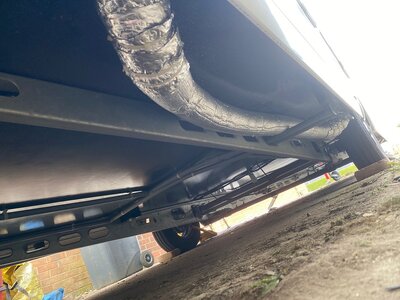

On my 2013 Truma Combi boiler /heater I have replaced both elements. The first 5 years of use of the van we were going away every 12 weeks for 4 weeks, summer and winter, to France, so a lot of use.
Winter time we used both gas and electric, combined, it seems very efficient, works as designed.
Not sure if this information is of any help to you. But combined use of gas and electric for us is great.
Winter time we used both gas and electric, combined, it seems very efficient, works as designed.
Not sure if this information is of any help to you. But combined use of gas and electric for us is great.

That really is unacceptable!Some caravan designs are awful when it comes to the blown air system. When we had an oil filled radiator as supplementary heating it was in a 2014 Swift Challenger 586, with bunk beds and a dinette at the rear for our daughter. The blown air pipe run to the rear was so inefficient that the air emitted up there was luke warm at best and no amount of butterfly valve adjusting made much difference. Our current caravan also has the ducting for the rear air vent running underneath the caravan but I have just insulated it to hopefully improve warmth in the end bathroom.
View attachment 7572
My old 2009 Bailey has all the hot air pipes internally.
Why on earth were Swift going backwards in 2014? Another great caravan design defect
Swift have done it for years on various models, probably because it's an easy/cheap approach and keeps it out of the way. I think a rectangular duct (like a hollow skirting board) run along the bottom of the inside wall would work and be unobtrusive but that'd probably cost a few pence more! I suppose it doesn't affect those that only use the caravan during the summer months but during spring and autumn it really does leave the back of the caravan as a cold-spot.That really is unacceptable!
My old 2009 Bailey has all the hot air pipes internally.
Why on earth were Swift going backwards in 2014? Another great caravan design defect
Some layouts don't allow for running duct internally. Our Altea has short 1m run under floor to reach end with bed and bathroom.
.....did you adjust the main balancing butterfly valve at the back of the Truma Ultraheat.The blown air pipe run to the rear was so inefficient that the air emitted up there was luke warm at best and no amount of butterfly valve adjusting made much difference.
The lever to adjust the valve is usually hidden away and difficult to get at.
It is under the floor of the wardrobe in a Swift 586.
Many people are unaware of this feature whereby heat can be prioritised to the back or front of the caravan.
The underfloor ducting is double skinned.
There is an outer waterproof ducting surrounding the air duct and this provides some insulation.
Last edited:
On our previous caravans which were Lunars, one had to remove the drawer above the heater to access that lever. It did make a difference, but then I also lagged the pipes underneath the caravan......did you adjust the main balancing butterfly valve at the back of the Truma Ultraheat.
The lever to adjust the valve is usually hidden away and difficult to get at.
It is under the floor of the wardrobe in a Swift 586.
Many people are unaware of this feature whereby heat can be prioritised to the back or front of the caravan.
The underfloor ducting is double skinned.
There is an outer waterproof ducting surrounding the air duct and this provides some insulation.
Yes, we tried that as someone on the old Swift-talk forum suggested doing it. It made a little bit of improvement but not much. One cold day I put the heating on for half an hour and the external ducting under the caravan was warm to the touch so even though it was double skinned some of the heat loss was considerable hence fitting insulation on any caravan we have had since......did you adjust the main balancing butterfly valve at the back of the Truma Ultraheat.
The lever to adjust the valve is usually hidden away and difficult to get at.
It is under the floor of the wardrobe in a Swift 586.
Many people are unaware of this feature whereby heat can be prioritised to the back or front of the caravan.
The underfloor ducting is double skinned.
There is an outer waterproof ducting surrounding the air duct and this provides some insulation.
What do you use as insulation? I have a section 1-2 metres long under the caravan. It's not really an issue heating wise as its only a small 2 berth caravan, but I'd rather conserve energy than waste it.Yes, we tried that as someone on the old Swift-talk forum suggested doing it. It made a little bit of improvement but not much. One cold day I put the heating on for half an hour and the external ducting under the caravan was warm to the touch so even though it was double skinned some of the heat loss was considerable hence fitting insulation on any caravan we have had since.
I used one of those insulated camping mats cut into strips and tied on using cable ties.What do you use as insulation? I have a section 1-2 metres long under the caravan. It's not really an issue heating wise as its only a small 2 berth caravan, but I'd rather conserve energy than waste it.
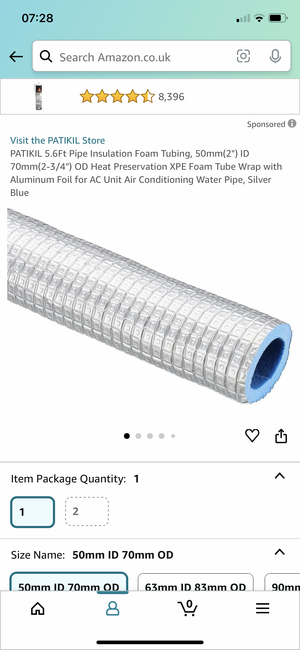
This stuff but the 75mm ID version, got it on Amazon. For the bends I use foil bubble wrap.What do you use as insulation? I have a section 1-2 metres long under the caravan. It's not really an issue heating wise as its only a small 2 berth caravan, but I'd rather conserve energy than waste it.